Narrative Play
The connection between play and learning is exceptionally important for child development. Play-based learning strengthens cognitive and emotional growth, helping children stay happy while also unlocking their creative potential.
For children aged 1–5
Our original early childhood and preschool education program, along with consistently applied teaching methods, helps children grow, develop, and work toward achievable goals at our kindergarten.
We believe that preschool education is an extremely important stage in a child’s and family’s life, which is why we guide children according to the ideas of humanistic pedagogy.
Ongoing dialogue with the child and the family is the foundation of our work. During the learning process, educators follow the principles of mutual understanding, trust, creativity, free choice, and the joy of discovery.
The connection between play and learning is exceptionally important for child development. Play-based learning strengthens cognitive and emotional growth, helping children stay happy while also unlocking their creative potential.
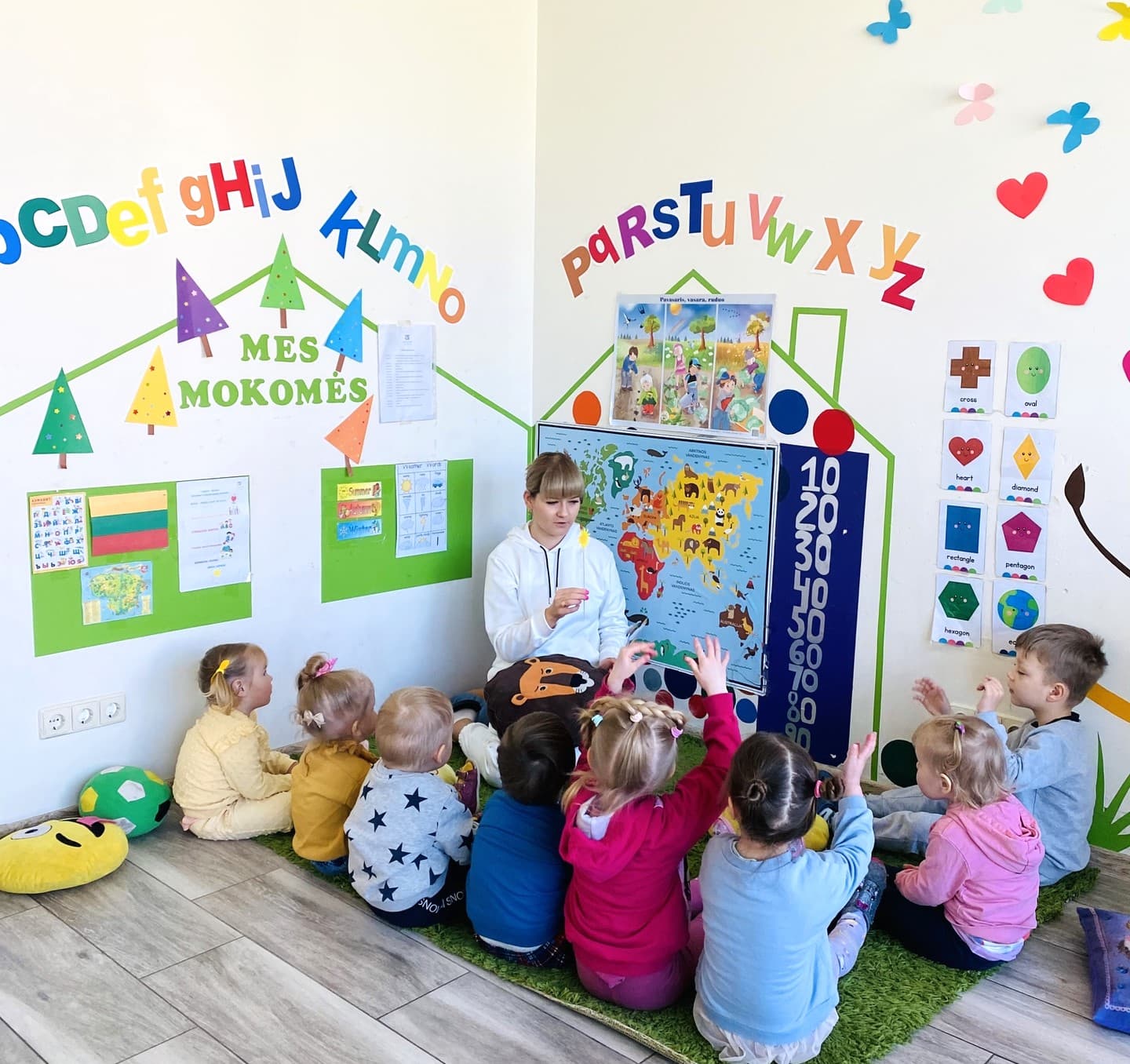
Through fairy tales and stories, children are encouraged to look for answers to their own questions. During learning activities, children are taught to express their thoughts clearly, listen to others, reveal their feelings, reflect, and summarize.
Through exploration and experimentation, children develop key skills: sight, touch, hearing, body movement and control. They also build attention, resourcefulness, reaction speed, practical experience, and strengthen critical thinking by discussing and reasoning, which helps them solve problems and better understand the world around them.
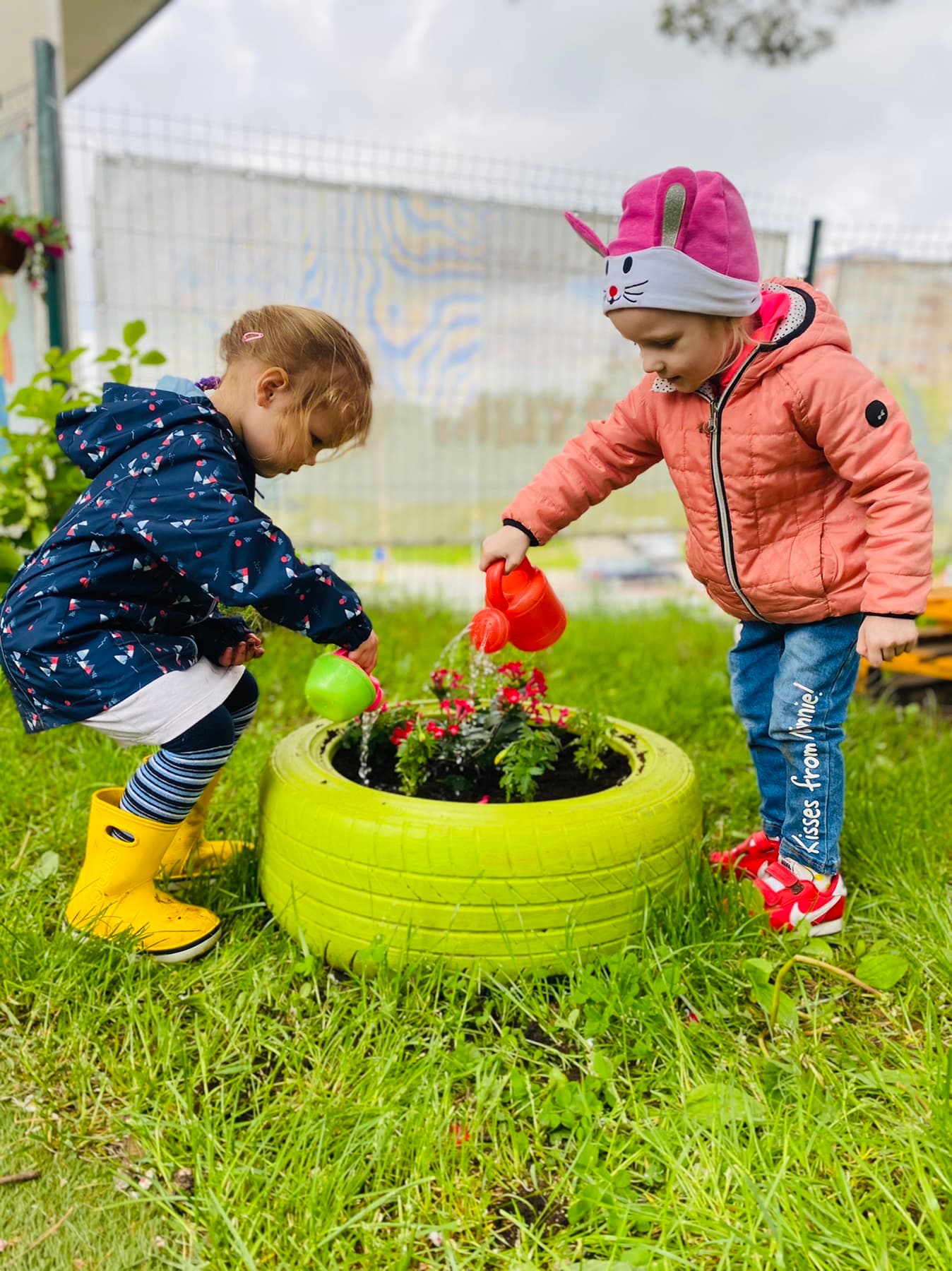
Children are constantly provided with different environments where they can discover and understand nature and surroundings, and recognize connections and unity between people, objects, and phenomena.
Books nurture empathy in children and help them better understand people’s thoughts, behavior, and the events around them. With teacher encouragement, books expand spoken vocabulary, develop memory, and improve learning and discovery abilities.
Developing critical thinking is an essential part of every day. Children learn to evaluate processes, meanings, and environments, analyze perspectives, and base conclusions on facts and experience. They build the ability to think clearly and rationally, identify essential ideas, and connect them.
In everyday activities, we develop five areas of emotional intelligence: self-awareness (understanding one’s own feelings); self-regulation (the ability to manage emotions); motivation (using one’s own interests); empathy (identifying with other people’s emotions); and social skills (appropriate communication).
We strengthen children’s abilities to communicate kindly and constructively, and to collaborate with peers and teachers. We create a supportive social environment in the nursery, and our teaching methods encourage children to learn effectively through expressing emotions, self-reflection, and safe behavior. We also teach respect for themselves and others.
We organize all activities at the nursery to keep children motivated and engaged. We use experiential learning methods: experiments, exploration, creative tasks, searching for and selecting information, and studying the environment through their senses.
These include understanding language, expressing ideas clearly, and speaking fluently. We help children build the ability to focus, listen, and pay attention to a friend or a teacher, while strengthening their skills in self-expression.
Assessing each child's progress in our kindergarten is a consistent and ongoing process. Following the preschool education competency framework, long-term observation, and collected evidence based on the child's engagement and activity outcomes, teachers prepare an individual assessment profile. This helps both teachers and parents steadily track the child's growth and progress, while planning the next steps for continuity.